
Sultan Ahmad Shah I founded Ahmedabad in 1411 CE on the eastern bank of the Sabarmati River. Six centuries later, UNESCO designated it India's first World Heritage City on July 8, 2017. The walled city alone contains 28 ASI-protected monuments and over 2,696 heritage structures – a density that rivals Varanasi and Jaipur.
Today, Ahmedabad draws over 25 million visitors each year. They come for 15th-century Sultanate mosques, Gandhian history, modern riverfronts, buzzing night markets, ancient stepwells, and family-friendly recreation at destinations like Kankaria Lake and Jaldhara Water Park.
Here are 15 places that define the city.
1. Science City

Spread across 107 hectares on the Ahmedabad–Gandhinagar highway, Science City ranks as Gujarat's largest interactive science education facility. The Gujarat Council on Science and Technology manages it.
Highlights inside: IMAX 3D Theatre (21 m × 15 m screen), Hall of Space (NASA-sourced exhibits and a Mars rover replica), Energy Park (renewable energy demonstrations), Musical Fountain (laser-synchronised water show), Robotics Gallery (added 2021), and an Aquatic Gallery housing 188 marine species across 68 tanks. The 6,000-seat amphitheatre hosts live science shows and cultural performances.
2. Sabarmati Ashram

Mahatma Gandhi founded Sabarmati Ashram in 1917 on the western bank of the Sabarmati River. He lived and worked here for 13 years.
On March 12, 1930, Gandhi walked out of this compound and began the Dandi Salt March – a 390 km protest against British salt taxes that catalysed India's independence movement. The ashram's original name was “Satyagraha Ashram.”
The complex now spans 36 acres. The Gandhi Smarak Sangrahalaya museum inside displays original letters, photographs, and personal belongings. A multimedia exhibition titled “My Life is My Message” traces his philosophy and campaigns.
Over 8 lakh people visit annually – the highest footfall of any cultural site in the city.
3. Kankaria Lake
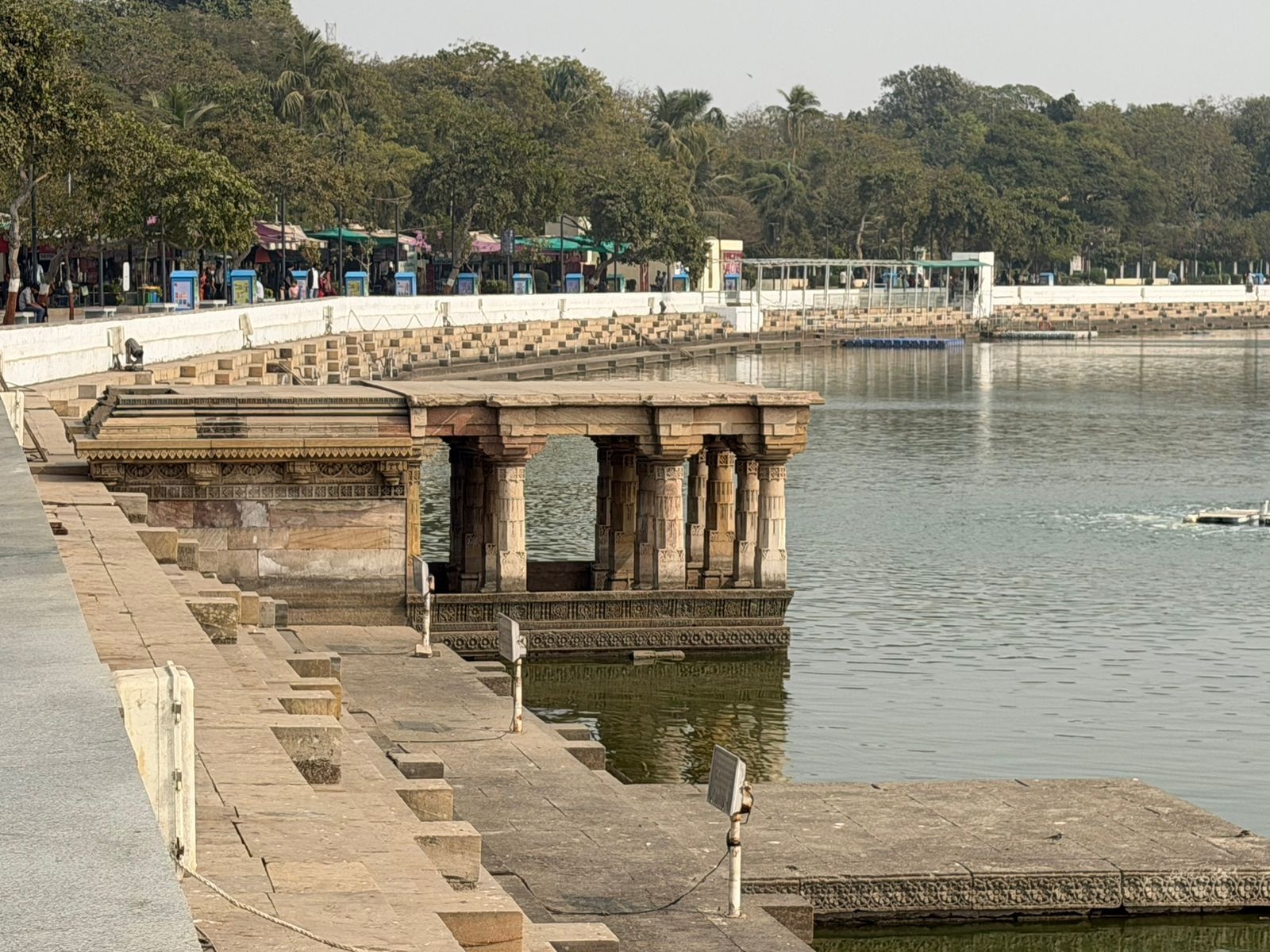
Sultan Qutub-ud-Din Ahmad Shah II built Kankaria Lake in 1451 CE as a circular reservoir. Its circumference measures 2.25 km, and at the centre sits Naginavadi – a pleasure pavilion connected to the shore by a causeway.
The lake now functions as the city's largest family recreation zone. Seven distinct attractions sit along its perimeter: Kamla Nehru Zoo, Balvatika children's park, a toy train, kid's city, boat rides, a tethered balloon ride, and an evening laser show. Food stalls and open-air seating line the lakefront promenade.
The southern boundary opens directly to Jaldhara Water Park through Gate No. 5. Families often explore the lakefront in the morning, then cross over to the water park's rides and splash zones after lunch.
4. Jaldhara Water Park
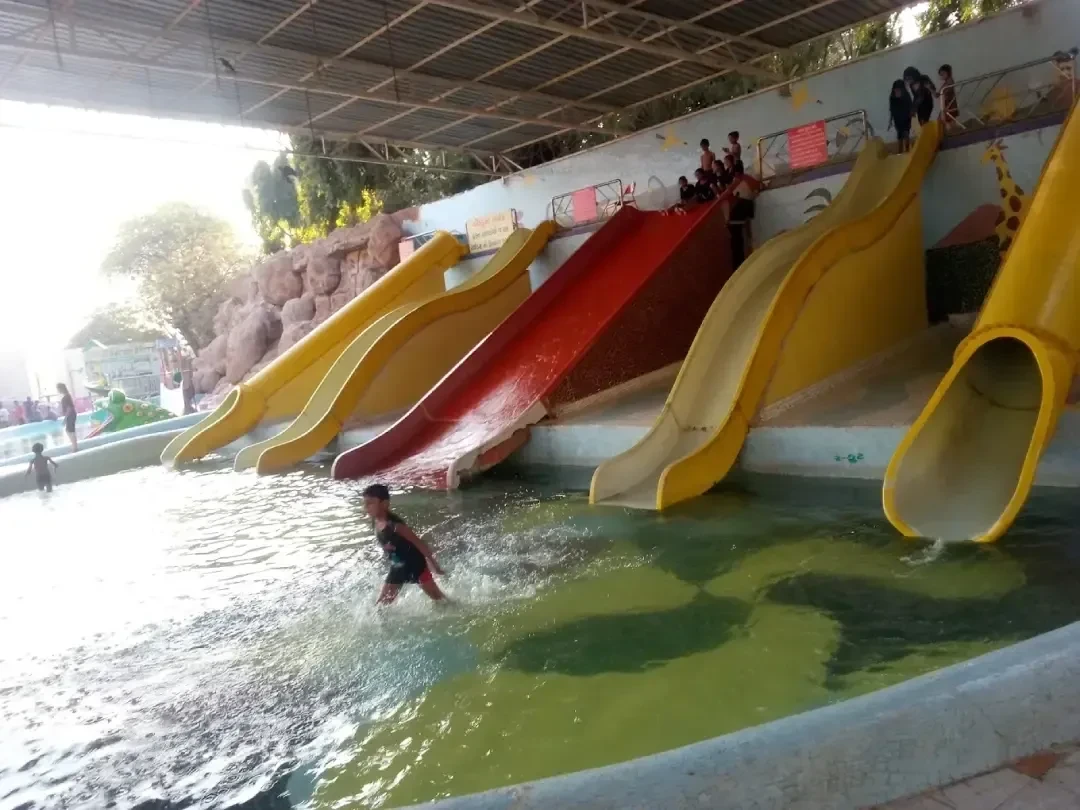
Adjacent to Kankaria Lake's Gate No. 5, Jaldhara Water Park has operated in Maninagar since August 18, 2002. The 15,000 sq ft facility runs 15+ water rides – from toddler splash pools to high-thrill slides for adults.
The headliners: a wave pool, rain dance arena, musical aqua dance stage, and multi-level water slides. Off the water, visitors find a bowling alley, VR arena, and arcade gaming zone – enough to fill a full day regardless of weather.
One detail sets the dining apart. The Gujarati Dining Hall delivers traditional thali to tables via miniature toy trains – a feature unique to this venue in the city. The Hunger's Choice Restaurant covers multi-cuisine options for those wanting à la carte meals.
The park also operates a banquet and marriage hall with poolside event hosting for weddings, corporate functions, and private celebrations.
5. Sidi Saiyyed Mosque

Built in 1573 CE by nobleman Sidi Saiyyed, this mosque holds the most photographed architectural detail in Gujarat – its rear-wall stone lattice screens, known as jalis.
The central jali depicts a Tree of Life: intertwined branches, roots, and palm fronds carved from a single slab of yellow sandstone. Individual tracery elements measure thinner than 3 mm. The craftsmanship is so iconic that the Indian Institute of Management Ahmedabad adopted the design as its official logo.
Ten semi-circular windows carry these carved screens. The two rear windows – the Tree of Life and the palm tree motifs – draw photographers, architects, and art historians from across the world.
6. Adalaj Stepwell (Adalaj Ni Vav)
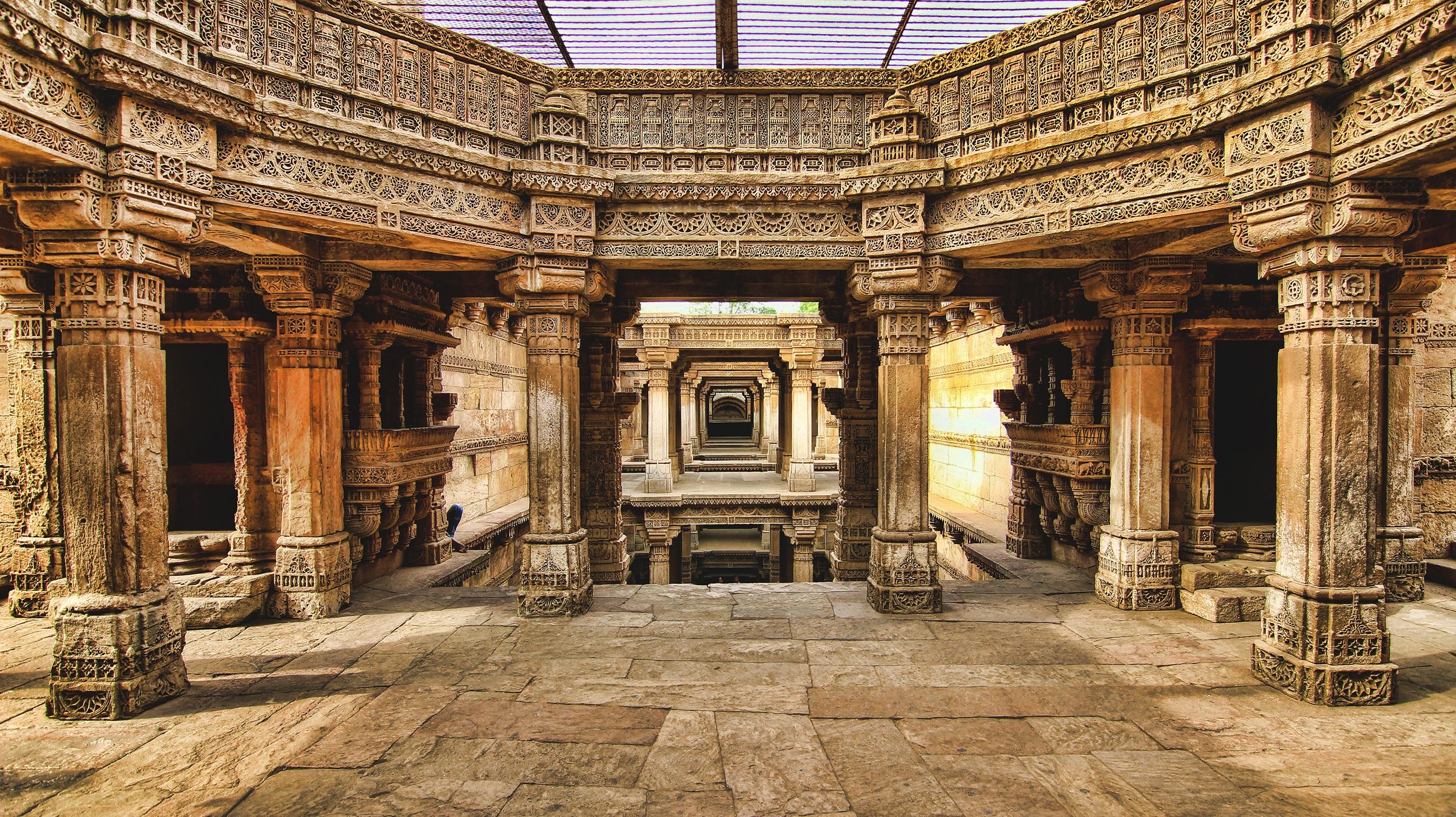
Queen Rudabai of the Vaghela dynasty commissioned Adalaj Stepwell in 1498 CE, completing it after her husband Raja Veer Singh fell in battle. The structure descends five storeys underground and served two purposes: community water access and a cool resting point for trade caravans travelling between Ahmedabad and Patan.
Over 500 carved motifs cover the pillars, walls, and platforms – blending Hindu, Islamic, and Jain ornamental styles. The octagonal well shaft connects all five levels. At the bottom, temperatures stay 5–6°C cooler than the surface – a natural cooling system that sheltered travellers for centuries.
7. Sabarmati Riverfront

The Sabarmati Riverfront stretches 11.5 km along both banks of the river. Developed in phases from 2012 to 2023, the project replaced encroached riverbanks with landscaped promenades, parks, plazas, amphitheatres, and commercial zones.
The marquee attraction: Atal Bridge, India's first pedestrian glass-floor bridge. Opened August 27, 2022, the bridge spans 300 metres and features LED panels inspired by the Uttarayan kite festival patterns. The adjoining flower garden, events ground (Navratri and kite festival venue), and food plazas make this the city's most popular evening destination.
8. Hutheesing Jain Temple

Sheth Hutheesing, a wealthy Jain merchant, commissioned this temple in 1848 – during a famine year – specifically to employ local artisans. Hundreds of craftsmen completed it in 2 years.
Dedicated to Dharmanatha, the 15th Jain Tirthankara, the temple rises in two storeys of white marble with 52 subsidiary shrines around the central sanctuary. Every surface carries detailed carvings: Jain cosmology, celestial beings, and botanical motifs cover pillars, ceilings, brackets, and domes.
The city contains over 300 Jain temples. Hutheesing remains the most photographed – its architectural density and 175+ years of pristine maintenance are unmatched.
9. Auto World Vintage Car Museum

Pranlal Bhogilal started collecting vintage automobiles in 1927. By 1987, his private garage held over 204 cars – enough to earn a Guinness World Record as the world's largest private collection. Auto World now displays 100+ fully restored models from the 1903–1975 era.
Marques include Rolls-Royce, Bentley, Mercedes-Benz, Cadillac, Chrysler, Lincoln, and Buick. Several belonged to Indian royalty – the Maharajas of Baroda, Rajkot, and Jodhpur. Headline exhibits: a 1934 Rolls-Royce once owned by the Nizam of Hyderabad and a 1928 Hispano-Suiza.
10. Manek Chowk

This public square beside Jama Masjid runs three shifts in 24 hours. Morning: vegetable and produce market. Afternoon: one of India's busiest jewellery and textiles bazaars with hundreds of gold and silver dealers. After 9:00 PM: an open-air street food market that stays alive until 2:00 AM.
Manek Chowk's night food stalls are the main tourist draw. Specialities include masala sandwich, Gujarati kulfi, pav bhaji, dabeli, ghevar, and mangoose juice. Peak weekend nights see 500+ people eating simultaneously across the square.
11. Jama Masjid

Sultan Ahmad Shah I – the city's founder – built Jama Masjid in 1423 CE. The mosque stands as the peak of Gujarat Sultanate architecture, fusing Hindu, Jain, and Islamic design principles into one structure.
260 pillars support 15 principal domes in a 5×3 grid. The pillars carry carvings adapted from Hindu temple traditions. The domes and arches follow Islamic geometry. The courtyard accommodates over 10,000 worshippers during Friday prayers and Eid.
A piece of trivia: the 2001 Gujarat earthquake damaged two “shaking minarets” (Jhulta Minar). Historically, pushing one minaret transferred vibrations to the other – with no visible connecting mechanism. Engineers still debate the cause.
12. Bhadra Fort

The city of Ahmedabad began here. Sultan Ahmad Shah I built Bhadra Fort in 1411 CE as the royal citadel, then planned the entire city around it. The fortified complex covers 43 acres and originally featured 14 gates and 189 bastions.
Inside: royal palaces, mosques, gardens, and the ancient Bhadrakali Temple – the goddess after whom both the fort and the surrounding neighbourhood take their name. Ahmad Shah I relocated his capital from Patan to this fort, naming the new city after himself.
The surrounding Bhadra Plaza underwent restoration in 2014. It now serves as a public gathering space with evening illumination.
13. Law Garden Night Market

After 6:00 PM, hundreds of vendors set up stalls along the perimeter of Law Garden in the Ellisbridge area. This is the city's premier evening market for traditional Gujarati handicrafts and textiles.
The stalls specialise in Kutchi embroidery, bandhani (tie-dye) fabrics, chaniya choli (traditional Garba outfits), mojris (embroidered leather footwear), oxidised silver jewellery, and mirror-work bags. Prices range from ₹100 to ₹5,000. Bargaining is standard – vendors start at 2–3× the final price.
In the 2–3 weeks before Navratri, daily footfall here exceeds 10,000 shoppers hunting for authentic Garba outfits. Surrounding food stalls serve khaman, dhokla, and fafda-jalebi.
14. Swaminarayan Mandir Kalupur

Bhagwan Swaminarayan personally inaugurated this temple in 1822 CE – making it the world's first Swaminarayan temple. It serves as headquarters of the Nar Narayan Dev Gadi, one of the Swaminarayan Sampraday's primary seats, a denomination with over 20 million followers.
The architecture features Burma teak carvings, coloured glass windows, and gilded murals of Hindu scriptures. The main shrine holds murtis (idols) of Nar Narayan Dev, installed by Swaminarayan himself. A haveli, gardens, and administrative offices complete the complex.
15. Calico Museum of Textiles

Gautam Sarabhai founded the Calico Museum in 1949. Housed in the Sarabhai Foundation's retreat in Shahibaug, the collection spans 500 years of Indian textile heritage – and ranks among the finest textile museums worldwide.
Over 3,000 artefacts fill the galleries: a 17th-century Mughal imperial tent, rare Paithani and Baluchar saris, temple hangings from South India, Tanchoi brocades from Varanasi, Kashmiri shawls, and Patola double-ikat saris. The museum admits visitors through two guided tours daily: 10:30 AM for textiles, 2:45 PM for crafts.
Advance registration is mandatory. Photography is prohibited inside galleries.